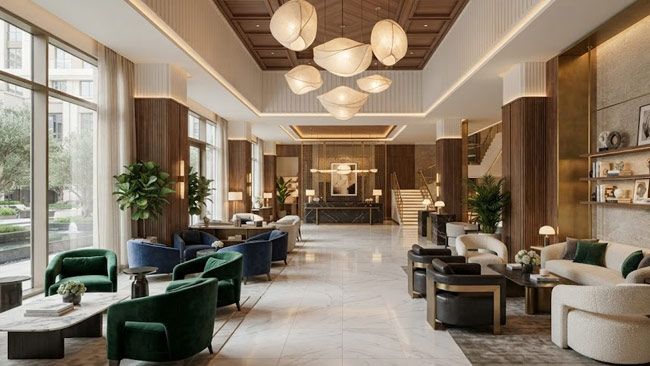
Walk into any decent luxury hotel today, and you can tell right away whether the team behind it understood real guest behavior or just flipped through an overseas catalog. True luxury rarely comes down to hanging a massive glass chandelier in an echoey marble hall anymore. What actually matters is acoustic calm, soft ambient lighting, and furniture that feels solid the moment you lean back into it. That kind of intentional Hotel Interior Designing transforms a stay from a generic room booking into something guests remember months later.
Travelers have changed how they use hotel spaces. They work on laptops in the lobby, eat at odd hours, and notice poor build quality in seconds. Here are seven grounded design trends shifting luxury hospitality toward something far more comfortable, practical, and enduring.
1. Acoustic Comfort and Biophilic Stone Textures
Nothing ruins a luxury suite faster than hearing hallway chatter or air conditioning hum. Designers are pulling raw materials into room interiors—rough-cut slate, grooved acoustic timber panels, and unpolished river stones—to naturally dampen sound while adding visual grit. Instead of plastic fake plants, properties are building internal micro-courtyards and light wells that bring real daylight down into central corridors. It keeps rooms quiet, grounds the guest after long transit, and cuts down the cold, sterile feel of glass towers.
2. Multi-Zone Lobbies Replacing the Traditional Reception Desk
The days of standing behind a velvet rope waiting for an agent behind a towering counter are pretty much over. Modern lobbies function more like expansive living rooms with distinct, semi-private corners where people can actually get things done.
- Low-slung check-in lounges: Guests sit on tailored fabric sofas with a beverage while check-in happens on a tablet.
- Day-to-night work nooks: Banquettes equipped with concealed power hubs that switch from morning coffee spots to evening lounge seating.
- Bespoke central bars: Freestanding beverage stations that anchor the room without turning it into a loud pub.
3. Solid Wood Joinery That Withstands Real Wear
Boutique hotel owners know the nightmare of veneer peeling off cheap particle board after six months of suitcase bumps. Commercial spaces need serious durability. Experienced Hotel Interior Designers in India are turning back to solid seasoned woods like teak, sheesham, and white oak for bed frames, luggage benches, and side credenzas. When joinery is built by skilled carpenters using traditional mortise-and-tenon methods, the furniture develops character over years instead of falling apart after the first high season.
4. Smarter Hotel Interior Designing for Bathroom Sanctuaries
Hotel bathrooms used to be tight, clinical utility boxes. Today, they swallow nearly a third of the guest room footprint. We see freestanding bathtubs placed right by frosted window alcoves, fluted glass partitions separating wet zones, and twin vanities cut from thick quartz or granite slabs. The plumbing fixtures are shifting to warm brushed nickel and unlacquered brass, paired with floor heating that turns a routine morning shower into a private spa ritual.
5. Warm, Layered Lighting (2700K and Below)
Blasting a room with cool 4000K ceiling spotlights gives off hospital vibes, not hospitality. High-end builds use layered, low-glare lighting setups focused between knee and eye level. Think recessed floor-wash LEDs along baseboards, warm fabric lampshades with tactile rotary dimmers, and hidden LED channels under headboard ledges. It gives guests total control over their environment without forcing them to decipher confusing digital touch panels on the wall.
6. Regional Heritage Without the Kitsch
Plastering generic souvenir art on guest walls is an easy way to cheapen a brand. Leading Hotel Interior Designers in India now partner directly with local craft communities to bring subtle, high-grade regional elements into the architecture itself. That might mean hand-hammered brass door hardware, custom handloom upholstery for lounge armchairs, or geometric sandstone jali screens that throw shifting patterns across walkways as the afternoon sun moves.
7. Residential Warmth Over Rigid Minimalism
The ultra-stark, monochrome look of the early 2010s felt sleek in photos, but it was miserable to live in for more than two nights. Hospitality has swung hard toward deep, layered residential comfort. Rooms now feature heavy blackout linen drapes, tactile bouclé accent chairs, deep-pile wool rugs, and matte wall finishes that soften glare. Good Hotel Interior Designing makes a hotel room feel like the home you wish you owned, rather than a corporate showroom.
Bringing Concepts to Life With SKF Decor Pvt. Ltd.
Translating these architectural concepts into functional reality takes serious manufacturing backbone and on-site precision. At SKF Decor Pvt. Ltd., based in Roorkee, we handle every stage of bespoke hospitality fit-outs—from crafting heavy-duty solid wood furniture to engineering full-scale luxury interior packages for hotels and resorts. We work closely with commercial property owners to build spaces that handle tough operational demands while delivering a truly memorable stay for every guest who walks through the door.